


The author of this website has been independently studying the biorhythm theory of the Viennese psychologist Hermann Swoboda and the Berlin physician Wilhelm Fließ from the 19th century for over four decades. Over many years, he has studied, observed, and evaluated the theory intensively for himself. During this time, he has come to the conviction that biorhythm theory can provide valuable insights into human performance and daily form. The author poses a central hypothesis: Can the biorhythm influence a team’s chances of success? To explore this question, he has developed his own digital tools that enable a biorhythmic analysis of players and entire teams. He invites all interested individuals to follow his considerations and test the hypothesis themselves. The tools he developed are intended to help identify patterns, make comparisons, and reveal possible connections. The author sees his work as an open research approach that actively involves curious users.
About Biorhythm
The biorhythm theory according to Swoboda/Fließ states that a person’s physical and mental performance, as well as emotional condition, are subject to specific biological rhythms that are the same for every human being and begin at the moment of birth. All three biorhythms start their first cycle in a positive phase, then after half of their respective cycle duration drop below the midline (also called the zero line), and subsequently enter a negative phase. At the end of each cycle, they return to the positive range. Days on which the biorhythm waves (also called biorhythm curves) cross the midline are considered critical days. However, if all three rhythms cross the midline on the same day, this can, according to biorhythm theory, lead to crisis-like effects. When the rhythms overlap in the positive range, this may result in particularly favorable days – in the negative range, however, their overlap tends to have an unfavorable effect.
Since all three biorhythms have different cycle durations,
- the physical cycle: 23 days,
- the emotional cycle: 28 days,
- the intellectual cycle: 33 days,
...a wide variety of biorhythm constellations arise throughout a person’s life, which can nevertheless be precisely calculated in advance for the entire lifetime.
Calculating the biorhythm requires only the person’s date of birth and the target date.
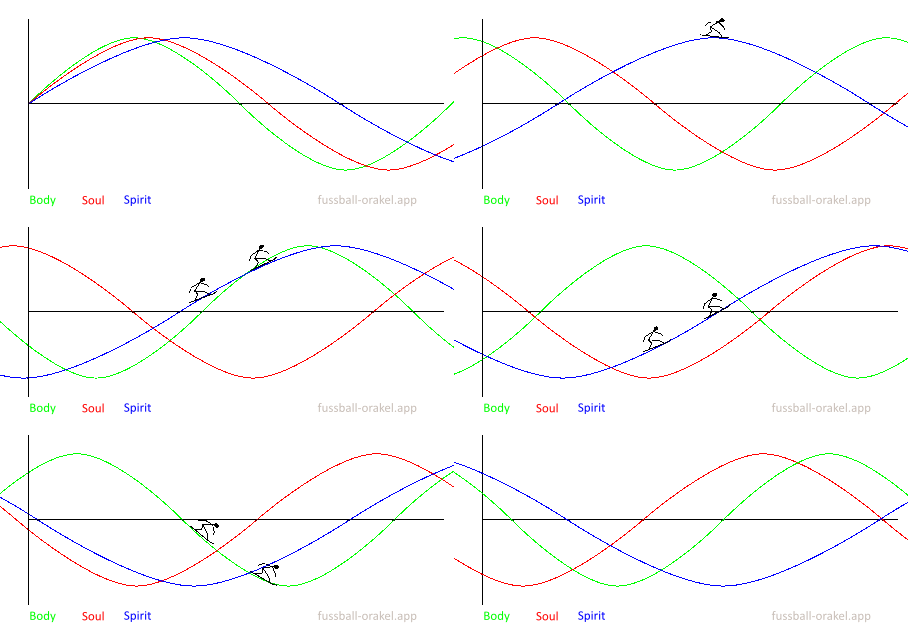
Biorhythm theory also explores interpersonal compatibility and claims that two people get along best when at least one of their biorhythms runs roughly in sync. This concept can explain the popular saying “to ride the same wave.” People born only a short time apart seem to match well from a biorhythmic perspective. In such pairs, all three rhythms run almost parallel. A slight phase shift of a few days is advantageous, as the critical constellations of both individuals do not occur simultaneously.
If you would like to explore the topic of biorhythm in more depth, you can find numerous additional resources online.
Today, there are already many web applications and mobile apps that allow you to calculate the biorhythms of up to two people.
However, I have considered whether it might be useful in certain cases to view and analyze the biorhythms of a larger team holistically – especially when it comes to accomplishing a demanding task together. An example of this would be a football match.
To explore this hypothesis, I have developed two online tools that I would like to present to you here.

Football Oracle App
The app calculates the biorhythmic constellations of up to eleven players for the respective match day and displays the results as percentage values.
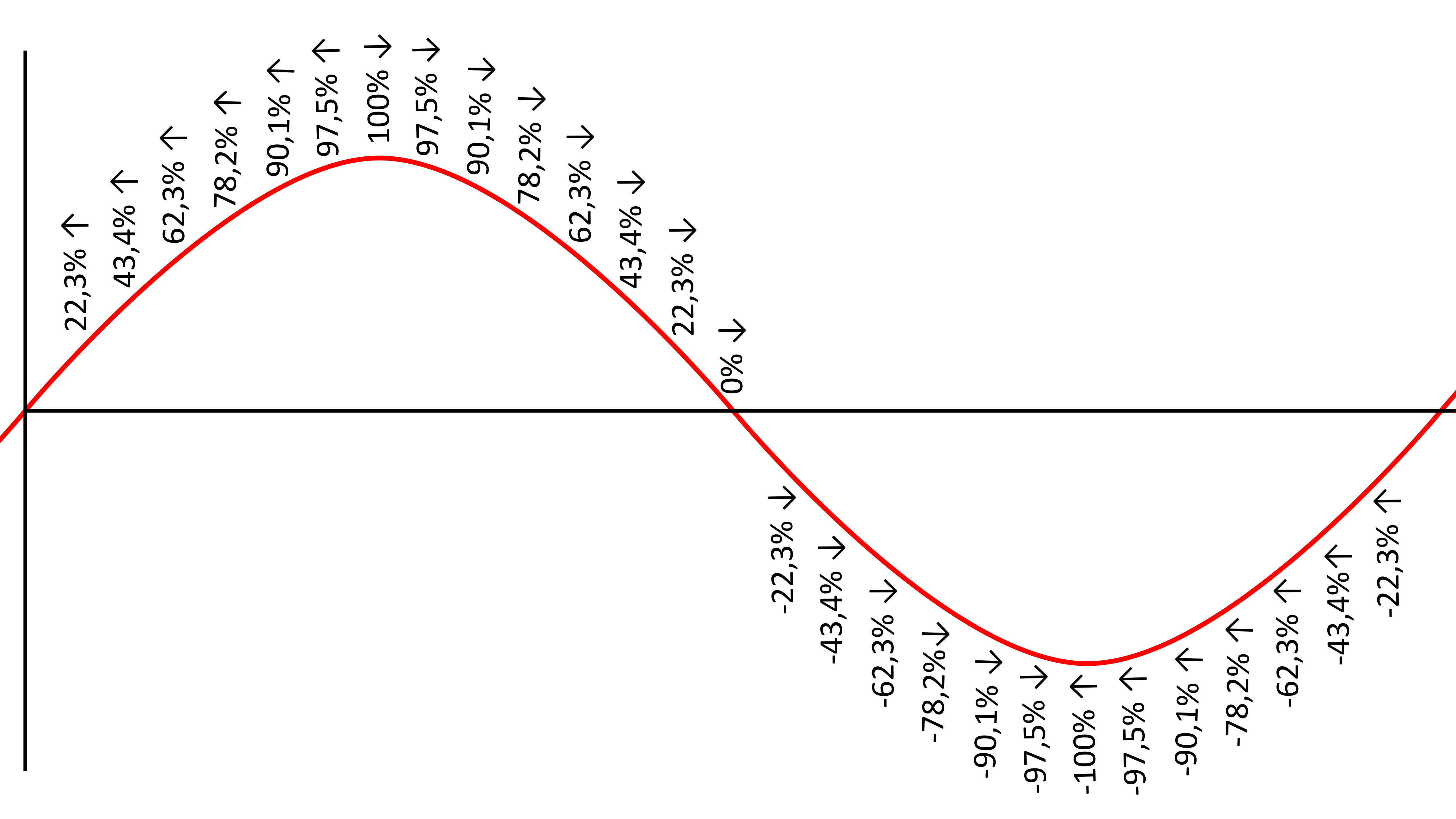
The higher the percentage, the higher the biorhythm wave lies above the midline – an indication of a positive form. Negative values indicate the opposite:
a wave below the midline suggests a potentially weaker daily form. A value of zero means that the wave is currently crossing the midline.
!!Attention: Critical Day!!
The arrow next to the number indicates whether the wave is currently rising or falling. In the “TeamForm” section, the current average values of the team are displayed.
To calculate the biorhythms, you need the players’ dates of birth and the target date / match day.
For quicker access, you can install a shortcut to the web app directly via your browser menu or add it to your device’s home screen.
This app is also very well usable on mobile devices.
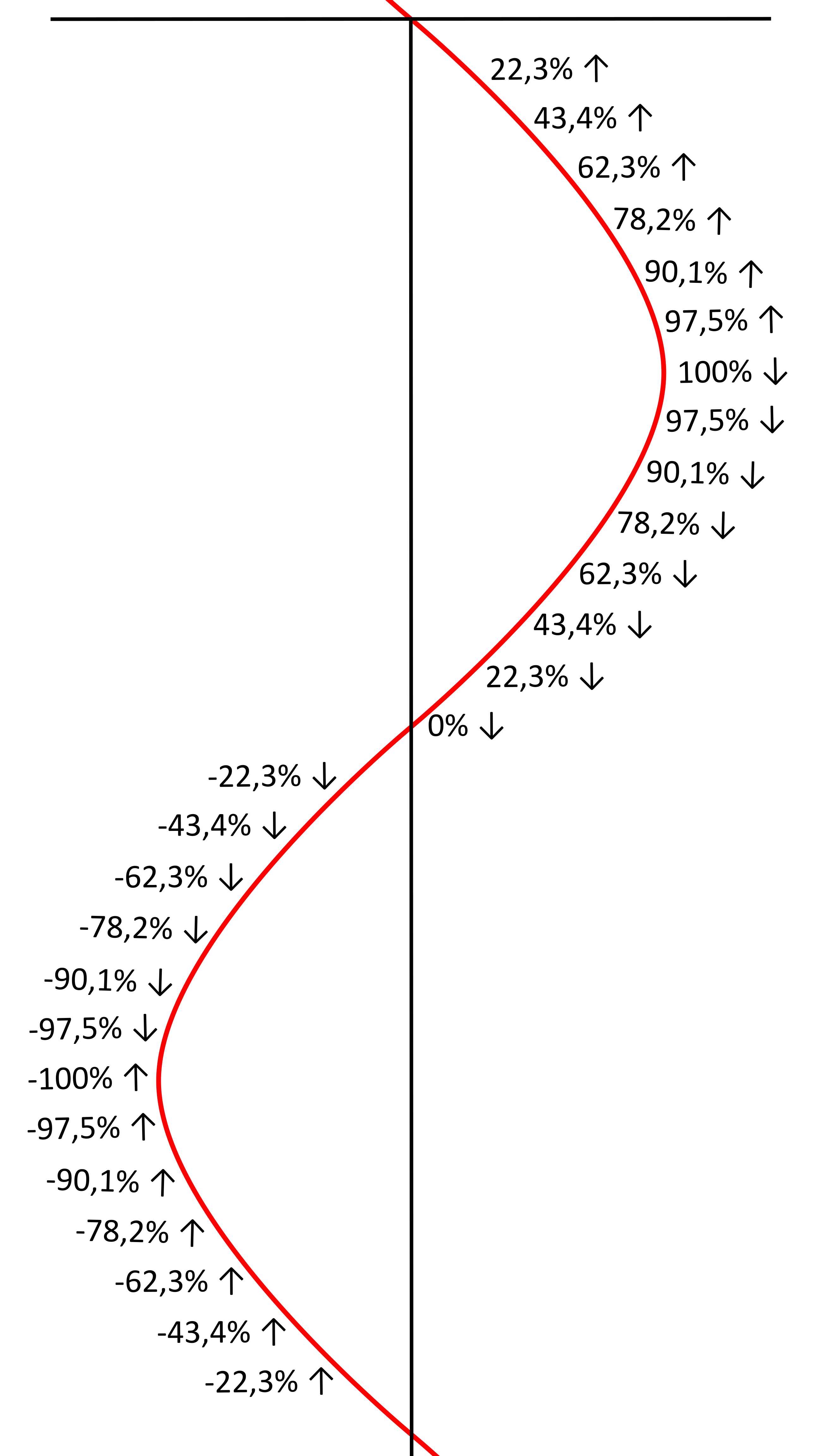
The following illustration shows the interpretation of the percentage values using the emotional biorhythm wave as an example.
Click/Tap for a larger view
New: Interactive Biorhythm Comparison for Two Teams
BIORHYTHM TEAM-COMPARISON
With this second tool, you no longer need to search for the players’ dates of birth yourself. Simply enter the player’s name into the input field, select the correct entry from the list, and confirm with the Enter key. This allows you to compare the biorhythms of both teams quickly and reliably. For better clarity, the calculator displays only the average value of physical, emotional, and intellectual cycles in the “Scores” column.
For space reasons, it is recommended to use this calculator on a desktop PC. The interface is optimized for larger screens and provides better clarity there.
Please note that not all well-known football players are included in the list yet. The database is continuously being expanded. To ensure that a name is recognized correctly, you can copy the name from other sources and paste it into the input field. Entering the name in its original language improves the hit rate.
Feel free to try the tools with other sports or team activities as well. It is recommended to test the applications first using past matches or events – before using them, for example, in the context of sports betting.
!!!Please be aware that gambling and betting can be addictive. Participation is only permitted if you have reached the legally required minimum age in your country!!!
It should also be noted that these tools cannot directly answer the question of who will win a football match. And that biorhythm theory has unfortunately not yet been scientifically confirmed. Perhaps together we can bring some movement into the research. 😊
And of course, many other factors also play a role in determining success. The goal is to explore to what extent the biorhythm may influence a team’s chances of winning.